Restricted Area Trekking in Nepal-A Complete Guide
Restricted Area Trekking in Nepal: A Glance
Ready for something different? Trekking in Nepal’s restricted areas is a whole new adventure. Picture yourself hiking through Upper Mustang or Manaslu, places most travelers never see. These routes need special permits, but you get quieter trails and deep dives into local culture. You’ll find all the details here—what permits you need, how much it all costs, and tips to make your trip smooth. Want a real Himalayan experience ? Start planning now.
Introduction to Restricted Area Trekking in Nepal
Here, step into the world of restricted area trekking in Nepal and you’ll find something special. These routes, which need a special permit, lead you off the regular tourist trail. The crowds thin out. Suddenly, you’re surrounded by untouched landscapes, real Tibetan culture, and wild high-altitude scenery. If you’re looking for a real adventure, this is where it happens.
Actually, these permit-only treks aren’t just about escaping the crowds. They let you wander through villages where ancient traditions are alive and well. You actually get to know the people who live here, not just watch them from a distance. The rules that limit group numbers aren’t just for show—they really do keep the trails quiet and peaceful. You can walk for hours, just you and the mountains, and feel like you’ve discovered something the world forgot.
Likewise, there’s a reason these areas are protected. The fragile ecosystems here need it. Trekking in these zones helps conserve rare plants, wildlife, and the unique Tibetan heritage that’s been here for centuries. Every step feels important, like you’re part of something worth preserving.
And the actual trekking? It’s no joke. Many of these routes cross passes higher than 4,000 meters, so there’s a real sense of accomplishment when you make it over. The permits also mean you’ll have guides with you, so safety’s covered. The views? They’re jaw-dropping, plain and simple.
In the end, these treks aren’t just about getting from point A to point B. They’re for people searching for something more—real adventure, personal challenge, and deep cultural encounters. You’ll explore hidden monasteries, soak up mountain silence, and come home changed.
Why Choose Restricted Area Trekking in Nepal :
- Experience less crowded trails for peaceful hikes
- Immerse in culturally rich treks Nepal traditions
- Support protected ecology through special permit trekking Nepal
- Enjoy authentic adventures with expert local guides
- Discover remote beauty at high elevations
What Are Restricted Areas in Nepal?
Here, let’s talk about restricted areas in Nepal and what that actually means for trekkers. These aren’t just random places with a few more rules. The government marks certain regions as off-limits unless you get a special permit. If you’re thinking about going solo, forget it—these zones don’t allow lone travelers at all.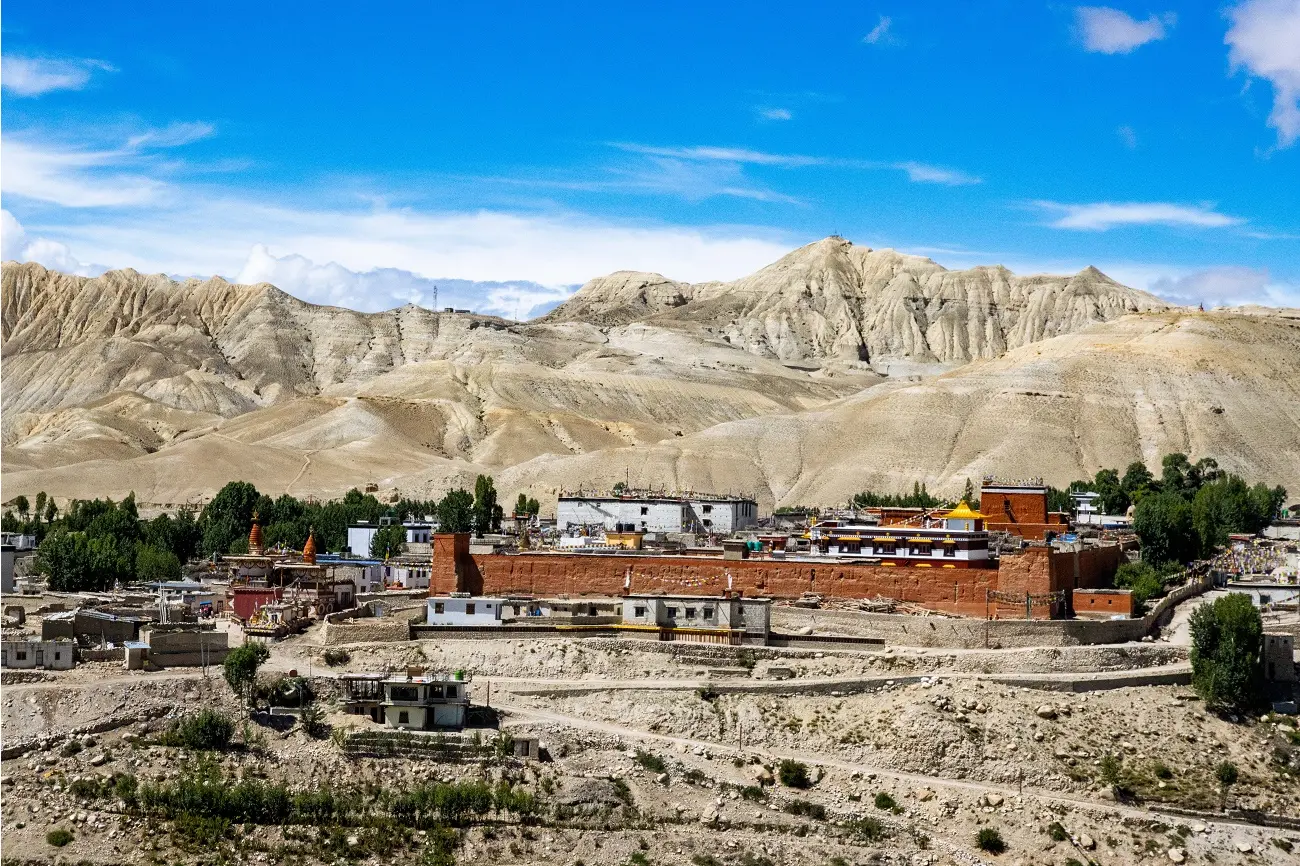
So, why all the restrictions? For starters, a lot of it’s about border security. Many restricted areas sit close to Tibet, and controlling who goes in or out helps keep the country safe. But there’s more to it than that.
Moreover, ecology’s a big reason, too. These places are home to fragile environments. By limiting access and requiring permits, Nepal makes sure trekkers don’t overwhelm the land or drain resources. It’s one way they protect rare plants, animals, and the wild beauty that makes these regions special in the first place.
Likewise, culture matters just as much. Many restricted zones have deep Tibetan roots, with traditions and villages that go back centuries. Permits aren’t just red tape—they help keep these communities and their way of life intact.
So, where are these places? Some of the best-known restricted areas are Upper Mustang (think Lo Manthang, up at 3,840 meters), the Manaslu region (with its epic 8,163-meter peak), and Upper Dolpo, home to Shey Phoksundo Lake at 3,610 meters. All of these require permits, and the rules are strict.
Bottom line: restricted areas in Nepal are about protecting borders, nature, and culture. If you want to trek there, you’ll need to plan ahead, get the right permits, and follow the rules. It’s all about making sure these wild, beautiful places stay that way.
Restricted Areas Overview with Permits and Costs :
| Area Name | Key Elevation | Main Reasons Special Permit Cost |
| Upper Mustang | Lo Manthang (3840m) | Culture + Border security USD 50 Per Day. |
| Manaslu Restricted | Larkya Pass (5160m) | Ecology + Border security USD 100/week (Sep-Nov); USD 75/week otherwise. |
| Upper Dolpo | Shey Phoksundo (3610m) | Ecology + Culture USD 500 first 10 days + USD 50 extra day. |
Nar Phu Valley Around 4000m Border security USD 100 (Sep-Nov); USD 75 otherwise
So, if you want to trek in Nepal’s restricted areas, you have to book through a registered agency. You can’t go solo—there’s a two-person minimum for these spots. The special trekking permit takes care of all the official fees, so you don’t have to worry about missing anything. In the end, the whole process gets a lot easier and you stay on the right side of the rules.
Why Choose Restricted Area Treks Over Popular Routes?
Why pick a restricted area trek over the usual Everest or Annapurna routes? Well, it’s simple—these treks show you a side of Nepal most people never see. Picture untouched valleys, wild landscapes, and almost no crowds blocking your view. Every day feels raw and real, like the Himalayas are putting on a show just for you.
Actually, you don’t just pass through villages—you actually get to know the people. No crowds pushing past, just honest conversations and traditions that haven’t changed in generations. It’s easy to get swept up in the culture because it’s all around you, unfiltered and authentic.
Then there’s the peace and quiet. Big-name trails are crowded, sometimes so much that you barely notice the scenery. Restricted area treks keep things small—permits limit the number of people, so you actually get time to breathe, think, and soak it all in.
And if you’re searching for something deeper, these trails often wind past ancient monasteries and sacred places. Walk in silence, feel the history, and let your mind wander—it’s good for the soul, honestly.
In fact, all this adds up. Sure, Everest Base Camp and Annapurna Circuit are famous for a reason, but restricted area treks offer something more—solitude, genuine culture, and a chance to see the Himalayas in their purest form. For anyone craving a real escape, these treks change the way you see Nepal.
Benefits of Restricted Area Treks Nepal Compared to Popular Routes :
- Untouched Landscapes — Pristine valleys and remote wilderness stay preserved
- Authentic Experiences — Genuine interactions with Tibetan-influenced communities
- Fewer Crowds — Limited permits ensure peaceful, less crowded trails
- Spiritual Depth — Ancient gompas and sacred sites for deeper reflection
- Overall Serenity — Ideal alternative to busy Everest or Annapurna paths
Key Restricted Areas and Top Trekking Routes
If you’re dreaming of trekking in Nepal’s restricted areas, here’s where the real adventure happens: Upper Mustang, the Manaslu Circuit, Upper Dolpo, Tsum Valley, Nar Phu, and Kanchenjunga. These routes aren’t your standard trails — you’ll need special permits, which come with their own costs, but what you get in return is pure Himalayan magic.
Here, let’s start with Upper Mustang. This place is wild — a remote, desert-like kingdom where you climb up to Lo Manthang at 3,840 meters. Permits here run about $100 per day. It’s worth it. You’ll wander through ancient caves, soak up centuries-old Tibetan culture, and feel like you’ve stepped into another world.
Likewise, the Manaslu Circuit is another stunner. You’ll circle Manaslu, which stands at a massive 8,163 meters, and cross the dramatic Larkya La Pass at 5,106 meters. In autumn, the restricted area permit costs $100 per week; other times, it drops to $75. The scenery changes constantly — dense forests, wild rivers, then up to those high, windy passes.
Moreover, Upper Dolpo is as remote as it gets. The journey to Shey Phoksundo Lake at 3,610 meters is tough but unforgettable. Permits are $500 for the first 10 days, plus $50 for every extra day. Out here, you’ll stumble upon isolated monasteries and deep blue lakes, all set against rugged, unforgiving landscapes.
Tsum Valley, on the other hand, feels almost spiritual. Picture peaceful Buddhist gompas, views of Ganesh Himal, and a quiet, untouched vibe. Permits are about $40 for 7 days in autumn, or $30 otherwise. It’s the perfect spot to immerse yourself in pure Tibetan Buddhist traditions.
Now, Nar Phu Valley is a real hidden gem. The trails wind through narrow gorges and forgotten villages near Annapurna. In peak season, permits are $100 per week; otherwise, $75. You get wild adventure mixed with the feeling that you’re discovering something hardly anyone else has seen.
Last but not least, Kanchenjunga Circuit in the east. This route takes you up toward the base camp of Kanchenjunga, the world’s third-highest peak at 8,586 meters. Permits here include conservation fees, but what you really come for is the rich mix of flora, fauna, and the unique Limbu culture.
If you want an off-the-beaten-path Himalayan trek in Nepal, these are the places to put on your list. Each one’s a real adventure — remote, raw, and unforgettable.
Top Restricted Areas Trekking Routes Overview :
| Route Name | Key Elevation | Peak Duration (Days) | Permit Cost (2026, Approx.) | Highlights. |
| Upper Mustang | Lo Manthang (3840m) | 15-18 | USD 50 per day | Ancient kingdom, caves, Tibetan culture. |
| Manaslu Circuit | Manaslu (8163m), Larkya La (5160m) | 14-18 | USD 100/week (Sep-Nov); USD 75 otherwise | Diverse terrain, high pass crossing. |
| Upper Dolpo | Shey Phoksundo Lake (3610m) | 20-25 | USD 500 first 10 days + USD 50/extra day | Remote lake, monasteries, rugged beauty. |
| Tsum Valley | Ganesh Himal views (4000m+) | 12-16 | USD 40/7 days (Sep-Nov); USD 30 otherwise | Spiritual gompas, pure Tibetan life. |
| Nar Phu Valley | Around 4000m+ | 10-15 | USD 100/week (Sep-Nov); USD 75 otherwise | Hidden valleys, Annapurna proximity. |
| Kanchenjunga Circuit | Kanchenjunga (8586m) | 18-25 | Variable + conservation fees | Eastern Himalayas, biodiversity, cultures. |
Essential Permits and Entry Requirements
If you’re heading into Nepal’s restricted areas for trekking, you need to know which permits to get. The big one is the Restricted Area Permit, or RAP. Without it, you can’t get into those zones—no exceptions. The authorities take this seriously and check permits often.
Here, you’ll probably need conservation area permits too. For example, ACAP covers the Annapurna region, while MCAP is for Manaslu. The money from these permits helps protect the environment and supports the local communities.
Don’t forget the TIMS card. It’s required for most trekking routes, even the restricted ones. This card helps officials keep track of trekkers, and if you ever run into trouble, it makes emergency rescues a lot faster.
Likewise, there’s also a rule about group size. You can’t do restricted area treks solo—there have to be at least two trekkers, plus a licensed guide. This isn’t just a formality; it’s all about safety and following the rules.
Finally, you’ll need to bring extra documents. Make sure you’ve got passport copies, some photos, and valid travel insurance. Get all this sorted before you go, and you’ll have a smooth start to your Himalayan adventure.
Essential Permits Overview for Restricted Area Trekking Nepal :
- Restricted Area Permit (RAP) --- Mandatory for zones like Upper Mustang (Lo Manthang at 3840m), Manaslu (8163m), Upper Dolpo (Shey Phoksundo Lake at 3610m).
- Conservation Area Permits --- ACAP (USD 30 approx. for foreigners), MCAP for Manaslu region.
- TIMS Card --- Tracks trekkers; often required alongside RAP.
- Other Requirements --- Minimum 2 trekkers, licensed guide, valid passport, insurance.
How to Get Restricted Area Permits in Nepal?
Here’s how you get a restricted area permit for trekking in Nepal. Start by booking your trip through a registered trekking agency. Don’t wait too long—agencies need some time to sort out the paperwork, and you can’t apply solo for these permits anyway. The agency takes care of everything.
Once you’re booked, send over your passport copies, visa details, and a few passport-sized photos. The agency gathers these to fill out your application properly and gets everything set up online. They use the official Nepaliport.immigration.gov.np portal for digital submissions, which speeds things up a lot.
Actually, you’ll pay the permit fees to your agency, not directly to the government. Costs depend on where and when you’re trekking, so ask your agency for details. Usually, they collect the full amount upfront, so you don’t have to deal with payments later.
Finally, the agency picks up your permit from the Department of Immigration in Kathmandu. The whole process takes about one to three days. After that, your permits are ready—just grab your gear and get set for the adventure.
Step-by-Step Process to Obtain Restricted Area Permits :
- Choose Registered Agency — Book trek with licensed Nepali agency
- Submit Documents — Passport copy, visa, photos, insurance, itinerary
- Online Application — Agency uses Nepaliport.immigration.gov.np portal
- Pay Fees — Agency handles RAP and other costs (e.g., USD 50 per day for Upper Mustang)
- Collect Permit — Pick up from Department of Immigration in Kathmandu
Here’s how you make things easy: If you want to trek in restricted areas of Nepal, you always need to go through an agency. Getting a special permit is pretty simple if you stick to the right process. That way, you can actually relax and enjoy the trip instead of stressing over paperwork.
Permit Costs and Fees Breakdown
Actually, here’s what you need to know about permit costs for restricted area trekking in Nepal . Upper Mustang leads the pack: it’s 1500 per day, and if you want to stay longer, it’s another $50 for each extra day. That adds up fast, so plan your trip length carefully.
Likewise, Manaslu works a bit differently. In peak season (September to November), you’ll pay $100 per week. Outside those months, it drops to $75 per week, plus $10 to $15 for any extra days. So, the time of year you go really matters for your budget.
Moreover, Upper Dolpo is right up there with Mustang in terms of cost—$100 per day near Shey Phoksundo Lake, then $50 for each additional day. These remote zones definitely charge a premium, but that’s the price for adventure in less-traveled places.
In fact, some other areas are easier on your wallet. For Nar Phu, it’s $100 for the first week during peak season, $75 otherwise. Tsum Valley is even more affordable: $30 to $40 per week.
Bottom line: permit fees jump around depending on the region, season, and how long you stay. Most of the cost goes to the special Restricted Area Permit (RAP), so factor that in right from the start when you’re budgeting your trek.
Permit Costs Breakdown for Key Restricted Areas Trekking Nepal :
- Restricted Area Key Location/Elevation Permit Structure (Foreigners) Additional Notes
- Upper Mustang Lo Manthang (3840m) USD 50 per day Highest fixed initial fee
- Manaslu Circuit Manaslu (8163m), Larkya La (5160m) Sep-Nov: USD 100/week + USD 15/extra day; Off-peak: USD 75/week + USD 10/extra Seasonal variation prominent
- Upper Dolpo Shey Phoksundo Lake (3610m) USD 500 first 10 days + USD 50/extra day Similar to Mustang pricing
- Nar Phu Valley Around 4000m+ Peak (Sep-Nov): USD 100/week + USD 15/extra; Off-peak: USD 75/week + USD 15/extra Often combined with ACAP
- Tsum Valley Ganesh Himal views (~4000m+) USD 40/week peak; USD 30/week off-peak Lower cost for spiritual route
So, remember to budget for conservation fees like the ACAP, which is $30. Trekking in Nepal’s restricted areas usually means you’ll need a few different permits, often bundled together. If you’re going through a trekking agency, they’ll sort out the special permits and keep everything above board. Plan carefully—no one likes last-minute surprises.
Mandatory Rules: Guide, Group Size, and Agency Booking
If you want to trek in Nepal’s restricted areas, you have to follow some strict rules. You can’t go solo—at all. The law says you need at least two trekkers, plus a licensed Nepali guide, and you must book through a registered agency. No exceptions.
Why so many rules? It’s about safety, protecting fragile environments, and respecting local culture. These are sensitive regions, often near borders, with unique traditions and ecosystems. The government keeps a close eye on who goes in and out.
In fact, you need a guide the entire way—not just for paperwork, but for real support. Local guides know the trails, handle emergencies, and help you connect with the culture around you.
Likewise, the minimum group size is always two trekkers, and agencies won’t even process a permit for smaller groups. That means you’ll either need to team up with someone or have the agency match you with others.
Here, booking through a registered agency isn’t just a formality. It’s how the authorities track visitors, enforce the rules, and make sure everyone’s accounted for. In the end, these rules keep the region safe and beautiful, and help make your trek a better, more responsible adventure.
Mandatory Rules Summary for Restricted Area Trekking Nepal :
- No Solo Trekking — Solo travel prohibited in all restricted zones
- Licensed Guide Required — Qualified Nepali guide mandatory for every group
- Minimum Group Size — At least 2 trekkers + 1 guide required
- Agency Booking Essential — Permits issued only through registered trekking agencies
- Reasons — Ensures safety, protects culture/ecology, controls access near borders
Hence, these rules keep things safe. Trekking in Nepal’s restricted areas runs smoother because there’s a clear system in place. Special permits really help protect the environment, too. So, when people head out on these adventures, they can feel confident and know they’re doing the right thing.
Best Seasons and Weather Considerations
If you’re planning a restricted area trek in Nepal, choosing right timing is everything. Spring and autumn are the sweet spots—clear skies, steady weather, and those jaw-dropping mountain views everyone talks about. Skip the monsoon months if you can. Places like Upper Mustang and Manaslu turn tricky and wet from June to August, and nobody wants to slog through muddy, slippery trails with clouds blocking every view.
Actually, Spring, from March to May, is all about color and life. Rhododendrons light up the lower hills. Days feel warm, not too hot, and the air stays fresh. Nature lovers usually flock to Nepal during this stretch for good reason.
Likewise, Autumn—think late September through November—is just as popular. The monsoon’s gone, so the air feels crisp and clean. Trails dry out, temperatures stay mild, and you get those endless, crystal-clear mountain panoramas. If you want reliability, autumn won’t let you down.
Similarly, altitude changes everything. The higher you go, the faster it gets cold—especially over passes like Larkya La, which sits at 5,160 meters. Layer up, and pack for sudden shifts in weather. Preparation makes all the difference in the mountains.
So, pick your season wisely, plan around the weather, and you’ll get the best out of Nepal’s restricted trails.
Best Seasons Overview for Restricted Area Trekking Nepal :
- Autumn (September-November) --- Clear skies, stable weather, best visibility for Upper Mustang (Lo Manthang at 3840m), Manaslu (8163m).
- Spring (March-May) --- Mild temperatures, blooming flora, ideal for Tsum Valley, Upper Dolpo (Shey Phoksundo Lake at 3610m).
- Monsoon (June-August) --- Heavy rain, slippery paths; avoid except rain-shadow zones like Upper Mustang.
- Winter (December-February) --- Cold, snow possible; limited suitability for high-altitude restricted areas.
Hence, pick spring or autumn—they’re the best times, no question. If you’re heading into Nepal’s restricted areas, timing matters even more. Get the special permit, and you’ll have a safer, way better trip. Good weather turns every step into something you’ll actually remember.
Physical Preparation and Difficulty Levels
Actually, getting ready for restricted area trekking in Nepal isn’t just about buying a permit and packing your bag. You need to get your body in shape too. The truth is, you’ll need decent fitness for any high-altitude trek out here, but some trails really push you. Figure out early what level you’re signing up for—like, are you going moderate or full-on strenuous?
Here, take the Manaslu Circuit, for example. That one’s tough. With the Larkya La Pass sitting way up at 5,106 meters, it demands stamina, solid legs, and a strong heart. Upper Mustang sits a bit lower on the difficulty scale—still challenging, but more moderate-strenuous than brutal. Upper Dolpo, on the other hand, is a beast thanks to its sheer remoteness and wild terrain. If you’re looking for something a bit easier, Tsum Valley counts as moderate, but don’t expect a walk in the park.
Actually, the real work starts months before you even land in Nepal. Daily training matters—think cardio, strength, and especially endurance. Steep climbs and descents are just part of the deal here, so your legs and core will thank you for every squat and lunge you do ahead of time.
Likewise, don’t ignore acclimatization either. The best treks build in rest days above 3,000 meters and take the “slow and steady” approach. That’s not just some guidebook advice; it actually helps you avoid altitude sickness and enjoy your trek more.
So, the bottom line? Match the route to your current fitness, train steadily, and don’t rush the altitude. That’s how you set yourself up for a successful adventure in Nepal’s restricted areas, especially if you’re aiming to make it happen.
Physical Preparation and Difficulty Levels for Restricted Area Trekking Nepal :
- Fitness Requirements — Cardio (hiking/running 4-5 days/week), strength training (squats, lunges), 5-8 hours daily walking practice
- Acclimatization Tips — Ascend 300-500m sleeping elevation/day above 3000m, rest days every 1000m gain, stay hydrated, avoid alcohol
- Moderate Treks — Tsum Valley, Nar Phu (good fitness, prior experience helpful)
- Strenuous Treks — Manaslu Circuit (Larkya La 5106m), Upper Dolpo (remote, high passes), Upper Mustang (long days, altitude)
- General Advice — Start training 3-6 months early, consult doctor, build mental resilience
Now, get ready, and you set yourself up for success. Trekking in Nepal’s restricted areas really pays off if you’re in good shape. Sure, you’ll need a special permit, but the challenge is part of the fun—and the views are absolutely worth it. Take care of your health, and you’ll come home with amazing stories you’ll never forget.
What to Pack and Practical Tips for Restricted Treks
If you’re heading into Nepal’s restricted trekking routes like Upper Mustang or Manaslu, packing right makes all the difference. You need the basics—gear that handles changing weather, helps prevent altitude sickness, and keeps you comfortable and respectful in local communities.
Mainly, start with layers. The weather in the Himalayas is unpredictable, so pack clothes you can add or shed easily. Bring moisture-wicking base layers, a warm fleece, and always have a waterproof jacket on hand. When you’re miles from the nearest village and the wind picks up, you’ll be glad you did.
Likewise, footwear matters more than people think. Sturdy trekking boots with solid ankle support are a must. Break them in before the trip—seriously, don’t show up with brand-new boots or you’ll regret it. Good boots keep blisters at bay, which means you’ll actually enjoy those long days on the trail.
Moreover, altitude sickness can sneak up fast if you’re not careful. Talk to your doctor about Diamox before you go, and once you’re trekking, take your time gaining elevation. Drink more water than you think you need. These simple habits help you stay healthy and avoid nasty symptoms.
In fact, respect matters—both for the environment and the people you’ll meet. Carry out everything you bring in, even your smallest bits of trash. Support the local economy by paying fair prices for services. This way, the stunning landscapes and vibrant villages stay that way for the next travelers.
When you walk through villages, dress modestly. People notice and appreciate the effort. Always ask before taking someone’s picture; it’s polite, and it leads to better, friendlier interactions. A little respect goes a long way out here.
In the end, trekking these remote areas is about more than just the scenery. Pack smart, trek responsibly, and show respect for the culture—your adventure will be richer for it.
Essential Packing List and Practical Tips for Restricted Area Trekking Nepal :
- Clothing & Layers — Base layers, fleece, down jacket, rain gear, warm hat, gloves, sun hat
- Footwear & Accessories — Trekking boots, camp shoes, trekking poles, gaiters, headlamp
- Altitude Sickness Prevention — Hydrate 4-5 liters/day, Diamox (consult doctor), ascend slowly, recognize AMS symptoms
- Responsible Tourism — No single-use plastics, support local guides, minimize environmental impact
- Cultural Etiquette — Dress modestly, remove shoes in homes/gompas, use right hand for giving/receiving, respect monasteries
Honestly, a little planning makes every trip better. Trekking in Nepal’s restricted areas really pays off if you show up ready for anything. When you have the right gear and know what you’re doing, those special permit treks become unforgettable. In the end, it’s all about soaking up the scenery and living the adventure.
Conclusion: Is Restricted Area Trekking Right for You?
So, is restricted area trekking in Nepal a good fit for you? If you’re after untouched beauty, real cultural immersion, and a shot at personal growth, these special permit treks easily deliver. Plan your trip well, and you’ll find yourself deep in the hidden corners of the Himalayas—places like Upper Mustang, Manaslu, or Upper Dolpo.
Actually, this kind of trekking isn’t for everyone, but if you’re the adventurous type who wants more than just the usual trails, it’s hard to beat. You get real solitude, wild landscapes, and the sense that you’ve actually discovered something, not just followed a crowd.
Moreover, the cultural side is huge. These journeys pull you into the heart of ancient Tibetan traditions. You’re not just a tourist—you’re having real conversations, sharing meals, and getting glimpses into ways of life that haven’t changed much for centuries. It’s personal, and honestly, it sticks with you.
Likewise, there’s something about these places that gets under your skin. High up among monasteries and gompas, it’s easy to start reflecting on bigger things. People go home from these treks seeing the world a little differently.
Of course, you need to plan carefully. These areas require special permits and guides, and for good reason. Trekking responsibly helps protect these places and keeps tourism sustainable, so future travelers can have the same experience.
In the end, if you’re willing to put in the effort, restricted area trekking in Nepal rewards you in ways you’ll remember forever. You face some real challenges, but what you get in return—those hidden Himalayan gems, the quiet moments, the stories you’ll tell—is worth every step.
Is Restricted Area Trekking Nepal Right for You? Key Considerations :
- You enjoy remote, less crowded trails and authentic cultural encounters
- You value spiritual depth and mindful travel in sacred landscapes
- You accept physical challenges and high-altitude demands
- You commit to responsible tourism and cultural respect
- You seek transformative adventures beyond popular Everest or Annapurna routes
Hence, Go ahead and dive into restricted area trekking in Nepal with confidence. If you’re up for it, special permit treks in Nepal offer some seriously rewarding adventures. There’s a whole world of hidden Himalayan spots just waiting for you to explore. So, why not start planning your next unforgettable journey right now?